
Repairs
Failed parts on heat pumps, air conditioners, furnaces and air handlers, from capacitors to compressors.
Whole-house comfort
Need heating, cooling or airflow help and not sure where the problem starts? Get the whole system looked at, from equipment to ductwork.
One system, three jobs
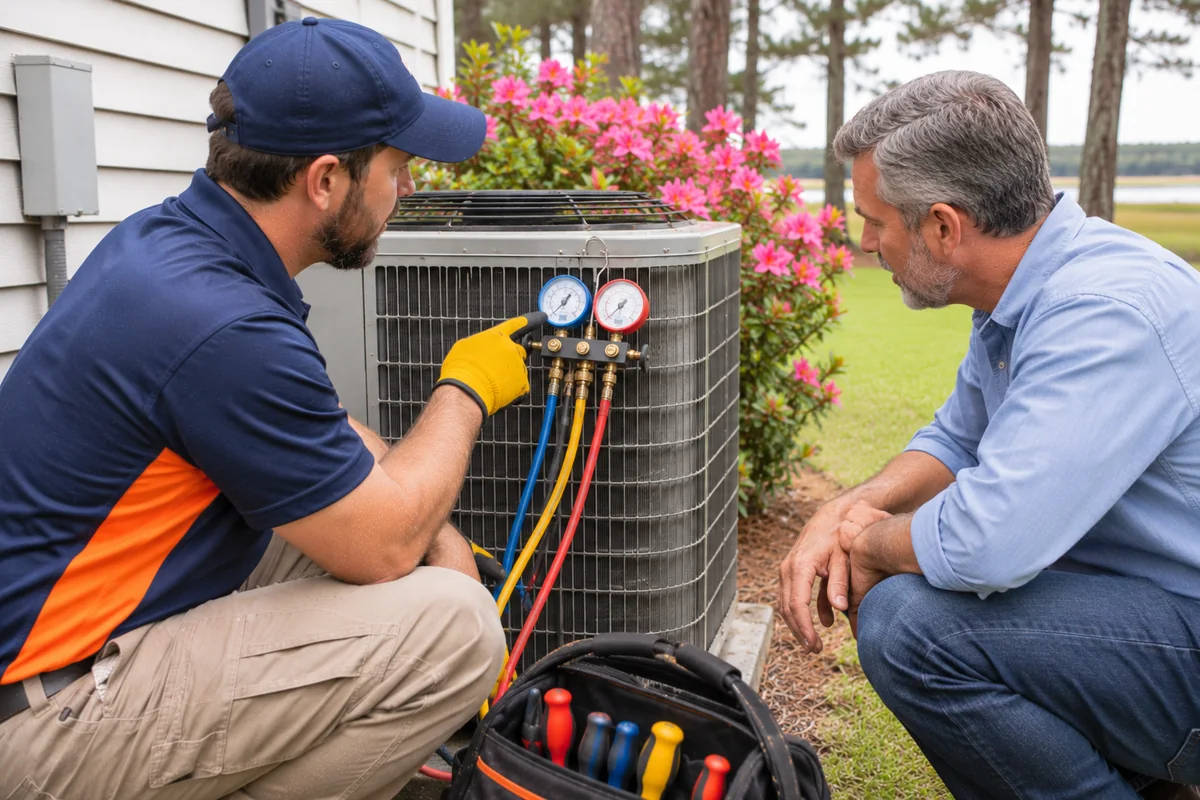
Heating, cooling and fresh air all move through the same equipment and the same ducts, which is the whole idea behind HVAC. Virginia Beach, VA homes depend on that system for most of the year, so a problem in one part, like a leaking duct or a weak blower, shows up as uneven rooms, high bills or humidity that never seems to drop.
Work on HVAC systems covers the outdoor unit, the furnace or air handler, the thermostat, the ductwork, the filters and the drain. Some calls are repairs, some are seasonal service, and some are planning for new equipment.
When the main question is a breakdown, focused HVAC repair Virginia Beach homeowners rely on gets the system running first, with bigger decisions after.
Scope
Failed parts on heat pumps, air conditioners, furnaces and air handlers, from capacitors to compressors.
Spring cooling and fall heating checkups that catch worn parts before peak season.
Replacement systems sized to the house, including heat pumps, gas furnaces and air handlers.
Leaks, crushed runs, disconnected boots and poorly balanced rooms that waste conditioned air.
Programmable and smart thermostats set up correctly for the equipment they control.
Filtration upgrades, humidity concerns and ventilation for rooms that feel stuffy.
Contractors

HVAC contractors handle everything from a single capacitor to a full changeout of the outdoor unit, air handler and ductwork. The technician checks the whole system on a service call, because a problem with HVAC units outdoors often starts with airflow indoors.
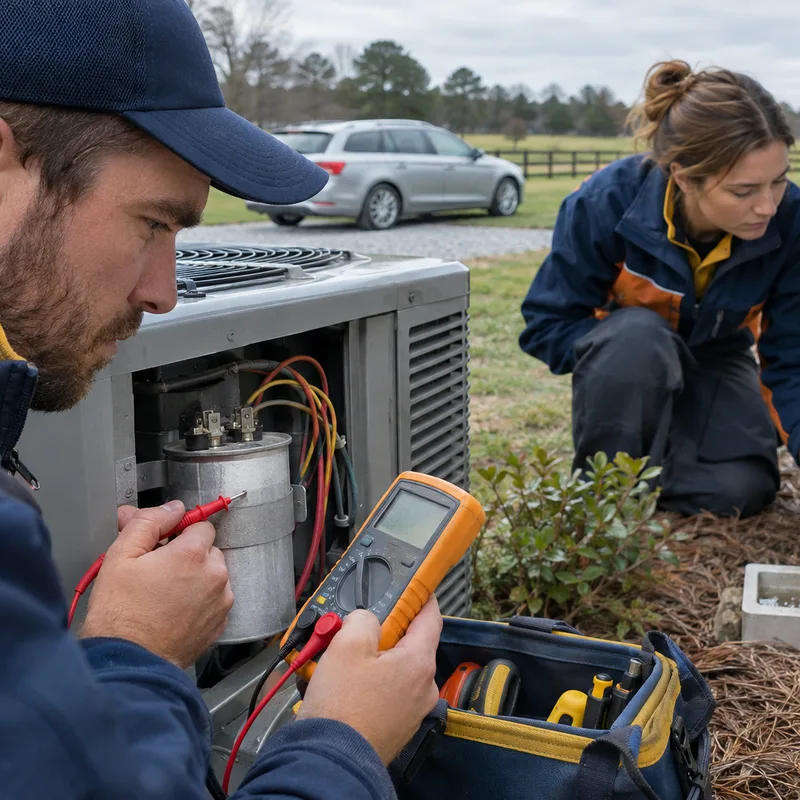
Electrical, refrigerant and gas readings guide the work, and findings are explained before anything is replaced.
Virginia Beach HVAC work also means dealing with humidity. An oversized system cools quickly but leaves the air damp, which is why sizing matters as much as efficiency when equipment is replaced.
System types
Electricity is the main heating fuel for most homes in the region, while a large share use utility gas, so local houses split between heat pumps with electric backup, gas furnaces paired with air conditioners, and dual-fuel systems that use both.
Each type has its own weak points. Heat pumps depend on defrost controls and a reversing valve; gas furnaces depend on ignition, venting and safety switches; dual-fuel systems depend on a thermostat that switches between them at the right outdoor temperature.
Knowing which type a house has, and how old each piece is, shapes every repair and replacement decision.
New equipment
01
The house is measured and its insulation, windows and duct layout are reviewed so the HVAC system is sized correctly.
02
Heat pump, furnace and air conditioner options are compared on efficiency, cost and how they fit the house.
03
Equipment replacement often needs a permit through the city’s Permits and Inspections Division, and the contractor can check what applies.
04
Old equipment is disconnected and removed, and the new system is set, wired, piped and connected to the ductwork.
05
Refrigerant charge, airflow, drainage and controls are checked at startup so the system runs as designed.
Pricing
A new air conditioner typically costs $3,300 to $5,900, a heat pump replacement $4,200 to $7,900, and a full system with furnace and ductwork $7,000 to $16,000. Most repairs typically cost $150 to $650.
Equipment size and efficiency, the type of system, attic or crawl space access, and whether ductwork or electrical upgrades are needed all move a project up or down within those ranges.
These are typical local ranges, not quotes. The price for a specific home is set after the house and the existing equipment are reviewed.
Ventilation
Bedrooms over a garage or at the end of a long run stay hot in summer and cold in winter.
Leaky return ducts pull dusty air from attics and crawl spaces into the system.
Undersized returns or closed registers force air through too small an opening.
Duct leaks in a hot attic pull humid air into the house and work against the air conditioner.
Flexible duct that has sagged, kinked or come off a boot delivers little air to the room.
Conditioned air lost into an attic still costs money to make, even though it never reaches a room.
Some rooms hot, some cold? Get the system and ducts checked.
Call (757) 523-3580Questions
Heating, ventilation and air conditioning. In most homes it means the furnace or heat pump, the air conditioner, the ductwork and the thermostat working as one system.
A full system with furnace and ductwork typically costs $7,000 to $16,000. A new air conditioner alone typically costs $3,300 to $5,900.
Yes. Most handle repairs, seasonal service, replacements and ductwork, which is useful when a repair-or-replace decision comes up.
Often yes. The city’s Permits and Inspections Division handles trade permits, and the contractor can check what applies to a specific job.
Yes. Call (757) 523-3580 to check availability for heating, cooling or ductwork help at your address.
Next step
Call to describe the comfort problem, the equipment and its age, and get practical advice from an experienced local technician on whether it needs a repair, service or a new system.