
New Noises
Rattling, buzzing, squealing or banging usually points to a loose panel, a failing motor or a contactor on its way out.
Service calls
Strange noise, weak airflow or a bill that doubled overnight? Get a clear answer on what is wrong and what it will take to fix.
When something seems off
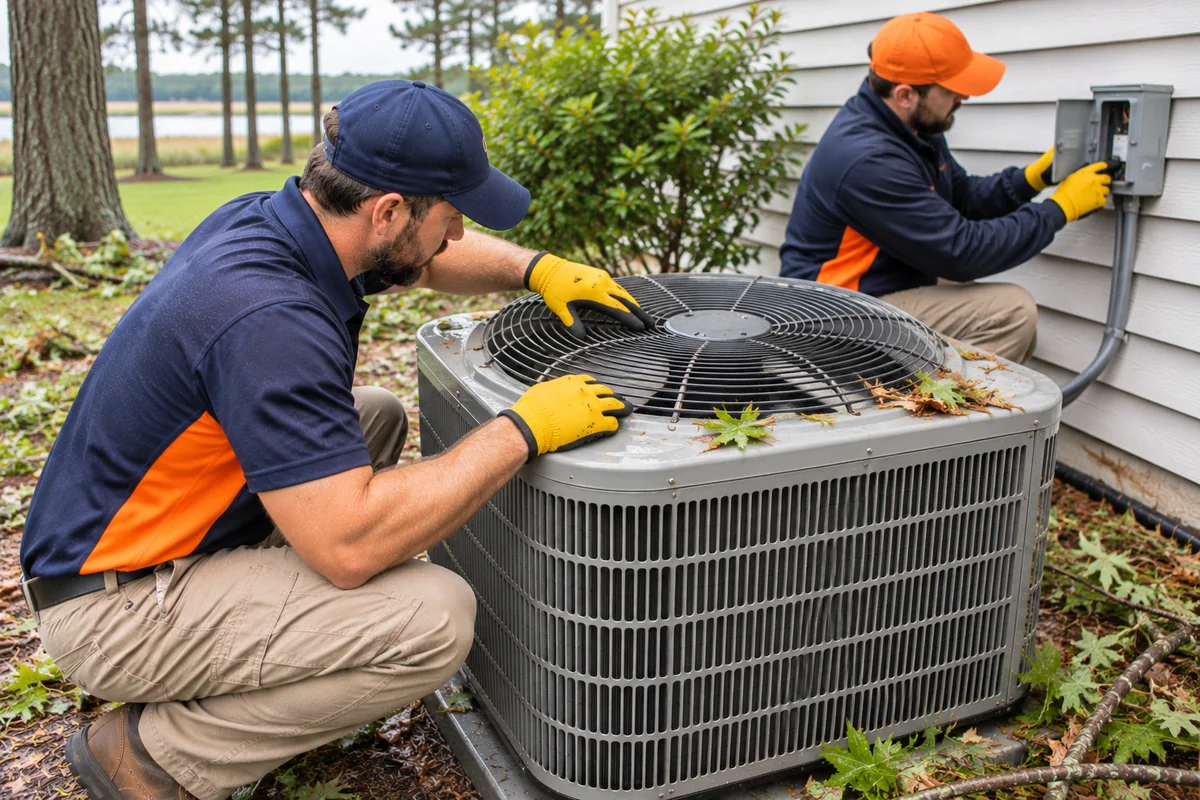
Not every problem is a full breakdown. A system that still runs but makes a new noise, smells odd, leaves rooms uneven or drives up the power bill is telling you something, and an HVAC service call is how to find out what. A technician tests the equipment, finds the cause and explains the options.
HVAC servicing covers heat pumps, air conditioners, gas and electric furnaces, air handlers, thermostats and ductwork. Many calls end with a small fix; others uncover a problem worth planning for.
When the system has stopped entirely, the call becomes straightforward HVAC system repair, with the same testing and the same explanation before work begins.
Reasons to call
Rattling, buzzing, squealing or banging usually points to a loose panel, a failing motor or a contactor on its way out.
A dusty smell on the first heating day is normal. Burning plastic, musty odors or rotten-egg smells are not.
A clogged filter, a failing blower or a disconnected duct leaves vents barely blowing.
A jump in usage often means a refrigerant leak, a dirty coil or backup heat running more than it should.
Blank screens, wrong temperatures or a system that will not respond to settings changes.
Drips from the air handler, a wet ceiling or a full secondary drain pan.
Storms and flooding

The city lists coastal storm surge, rain-driven street flooding and river flooding as its three most common flood types. Any of them can reach an outdoor unit on a low pad or an air handler in a garage.
Equipment that sat in water should stay off until it is checked. Salt water from surge is especially hard on coils, wiring and control boards, and turning a flooded unit back on can short out parts that might otherwise have been saved.
An after-storm check looks at the electrical parts, the coil, the fan motor and the drain, and confirms the unit is level and secure on its pad.
The visit
01
What changed, when it started and whether it happens in heating, cooling or both.
02
The equipment, filter, thermostat and accessible ducts are looked over for obvious problems.
03
Electrical readings, refrigerant pressures, airflow and temperatures are taken and compared with normal values.
04
The finding is explained in plain terms with the repair options and their prices.
05
Approved repairs are completed; larger projects get a clear outline of the next step.
Typical costs
Most heating and cooling repairs typically cost about $150 to $650, and refrigerant leak repair typically runs $400 to $1,500. A seasonal tune-up typically costs $70 to $200 per visit. These are typical local ranges, not quotes, and the price for a specific job is set once the technician has found the cause. Homes in Virginia Beach, Virginia with equipment in attics or crawl spaces can sit toward the upper end because of access.
Second opinions
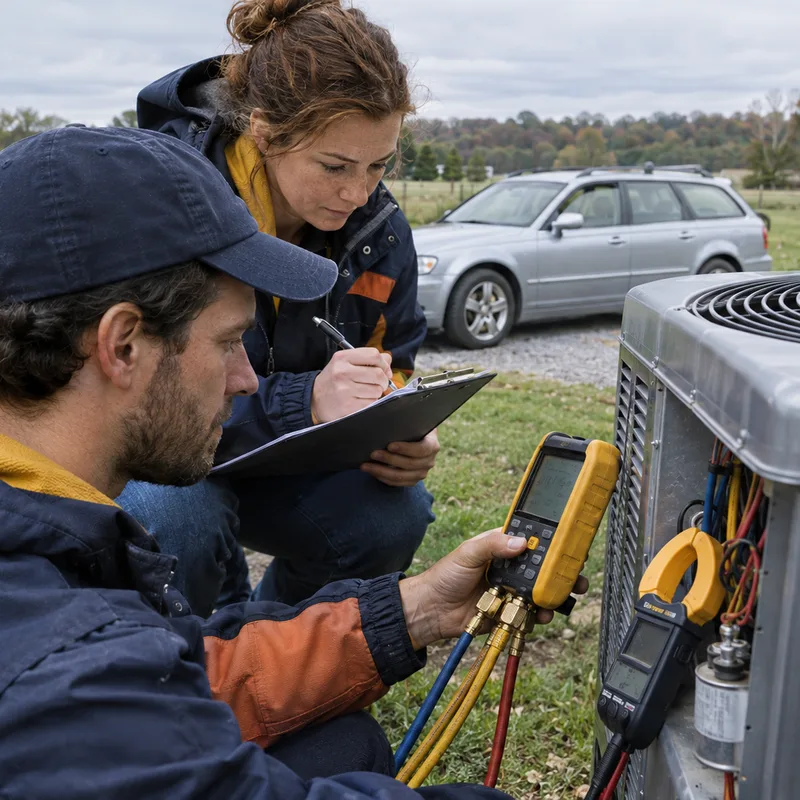
A quote for a new compressor or a full system is a big decision, and a second look is reasonable. A second-opinion visit retests the equipment and checks whether the diagnosis holds up.
Sometimes it confirms the first finding. Other times the problem turns out to be a smaller part, such as a capacitor or a contactor, that makes the compressor look dead.
Virginia Beach HVAC service calls like this end with a clear answer either way, so the next step is based on readings rather than guesswork. Owners across Virginia Beach, VA use them before committing to major work.
New noise or smell from the system? Get it checked early.
Call (757) 523-3580Questions
An inspection of the equipment and thermostat, electrical and refrigerant readings, airflow checks and an explanation of the cause with repair options and prices.
Most heating and cooling repairs typically cost about $150 to $650, and a seasonal tune-up typically costs $70 to $200 per visit.
No. Leave it off until it has been inspected, because water and salt can short the wiring and controls when power is restored.
A light dusty smell on the first cold day is normal. A strong burning or electrical smell means turn the system off and have it checked.
Yes. The equipment is retested and the original diagnosis is checked against the readings.
Next step
Call to describe what the system is doing and get a reliable explanation of the cause and the fix from an experienced local technician.