
AC Repair
Warm air from the vents, ice on the copper lines, water around the indoor unit or an outdoor unit that hums and will not start.
Heating and cooling repair
No heat, no cooling, or a system that runs and never catches up? Get the real fault found and fixed by a trusted local technician.
Diagnosis first
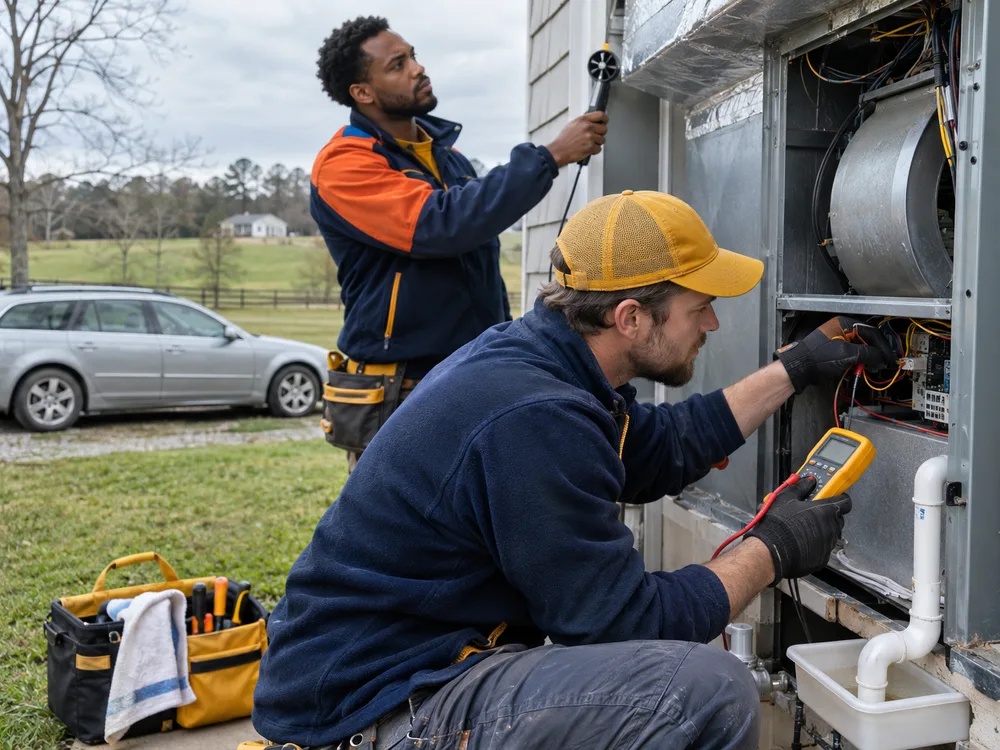
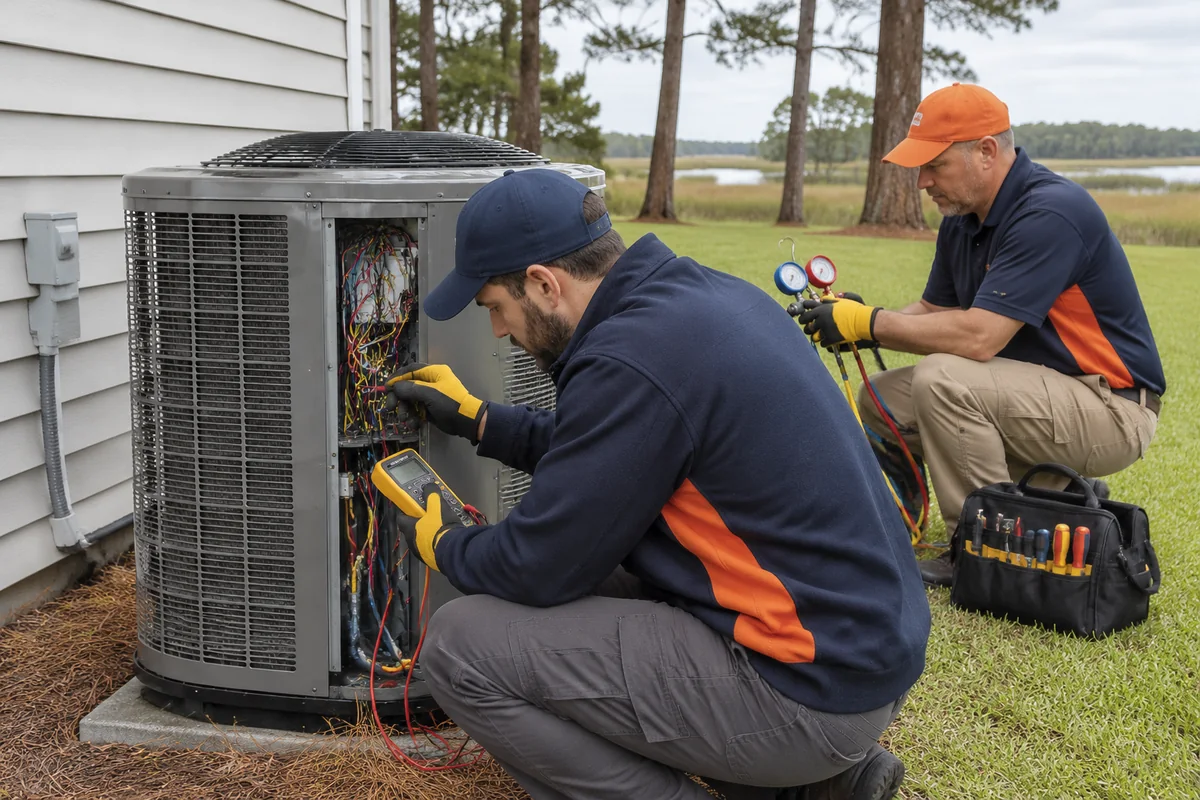
A house that will not cool, a heat pump stuck in defrost, or a furnace that lights and shuts off all start with the same step: finding the part that actually failed before anything is replaced. That is the core of HVAC repair. Virginia Beach, VA homes run their systems hard for much of the year, so a weak capacitor, a clogged condensate drain or a slow refrigerant leak tends to show up as a comfort problem first and a breakdown second.
An HVAC system repair should cover the whole system, not just the part making noise. The outdoor unit, the indoor air handler or furnace, the thermostat, the ductwork connections and the drain line are all checked, because one failure often causes another. A frozen coil, for example, usually traces back to airflow or refrigerant, and replacing a blower motor without fixing a crushed return duct only buys a few months.
Common Virginia Beach HVAC repair jobs include failed capacitors and contactors, blower and condenser fan motors, ignition and flame sensor faults, thermostat and control board problems, refrigerant leaks, and drain clogs that trip safety switches. Each one gets an explanation and a price before the work starts.
Services
Warm air from the vents, ice on the copper lines, water around the indoor unit or an outdoor unit that hums and will not start.
Heat pumps that blow cool air in winter, stay in defrost too long, run on emergency heat or never shut off.
Gas and electric furnaces that will not light, short cycle, trip the breaker or make the house smell like dust or burning.
Tank and tankless units with no hot water, lukewarm water, leaks at the base or a pilot that keeps going out.
Full heating and cooling help for the house: repairs, seasonal service, new equipment and duct problems in one place.
Spring cooling checkups that clean the coils, clear the drain and test the refrigerant charge before summer.
Twice-a-year visits for heat pumps, furnaces and air conditioners, with coils, drains and electrical parts checked each season.
Service calls for odd noises, high bills, weak airflow, thermostat trouble or a system that needs a second opinion.
New air conditioners, heat pumps, furnaces and air handlers sized to the house, with the old equipment removed.
Year-round comfort help for homes with uneven rooms, aging ductwork or a mix of heating and cooling equipment.
Before any part is replaced
Breakers, the outdoor disconnect, low-voltage wiring and the thermostat come first. A tripped float switch or a loose wire can look exactly like a dead compressor.
A clogged filter, a blocked return or a slipping blower belt starves the system of air. Low airflow causes frozen coils in summer and overheated furnaces in winter.
Pressures and temperatures are measured, not guessed. A low charge means a leak somewhere, so the next question is where, not how much to add.
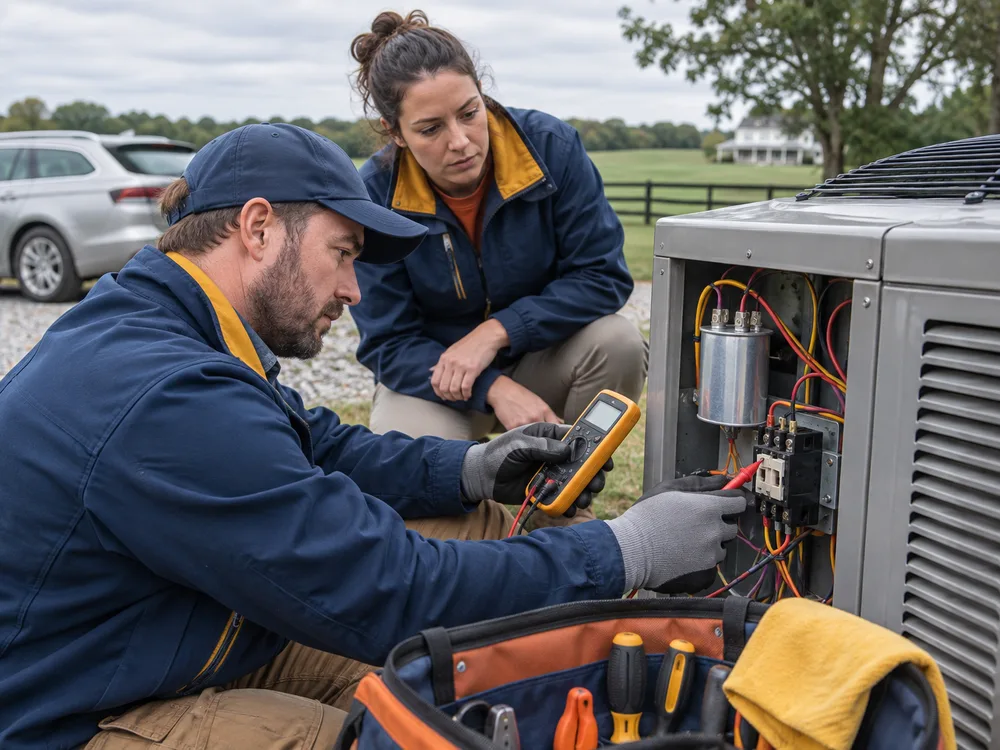
Capacitors, contactors and fan motors are tested with a meter. These parts fail often in hot weather and are among the simplest HVAC repairs when caught early.
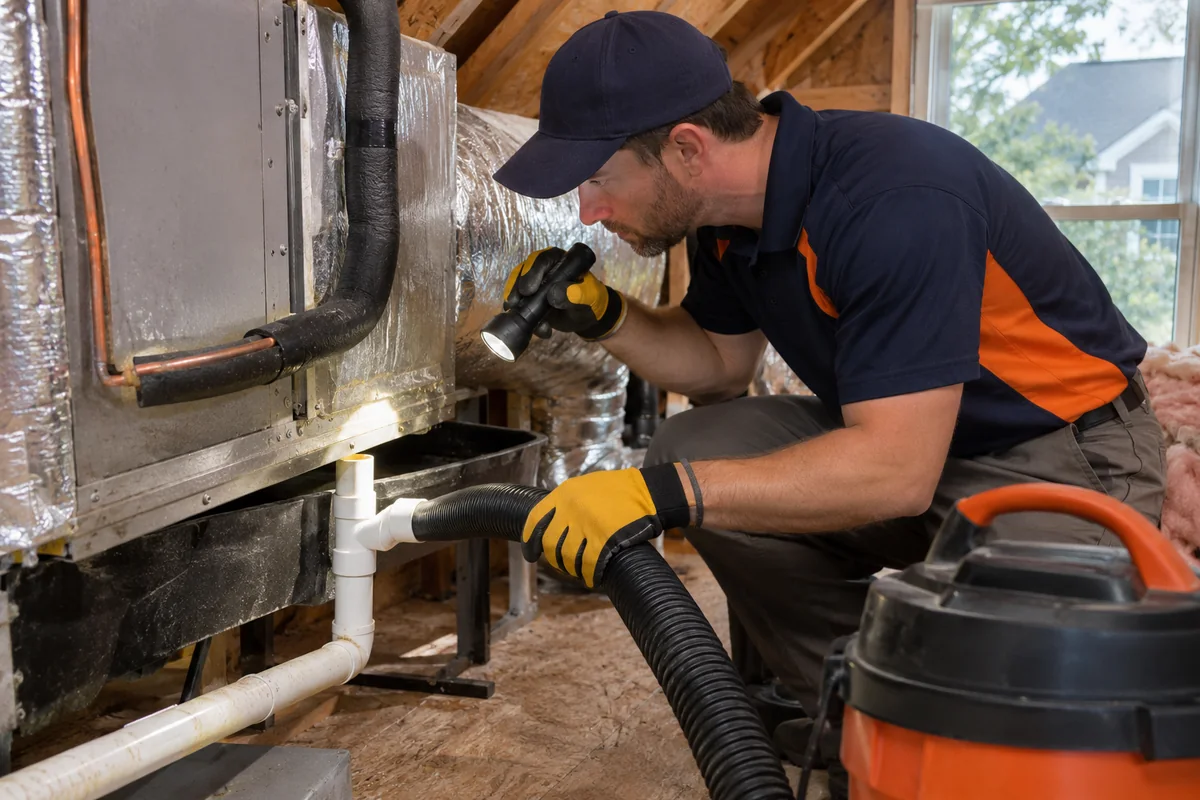
A cooling system pulls gallons of water out of humid air on a summer day. A slimed-over drain line or full pan will shut the unit down or soak a ceiling.
The right call is not always the cheapest part. Age, refrigerant type and the repair history all decide whether fixing the system still makes sense.

Repair or replace
Most heating and air repair on a system under about ten years old is worth doing, especially electrical parts, motors and drain problems. The decision gets harder when the compressor fails, the coil leaks a second time or the unit still uses R-22 refrigerant, which has not been produced or imported in the United States since 2020.
Many houses in the city were built between 1970 and 1999, so plenty of homes are on their second or third outdoor unit with ductwork that is just as old. When a replacement is on the table, a good technician explains what the repair costs today against what a new system costs, and leaves the decision to the homeowner.
Typical costs
Most heating and cooling repairs typically cost about $150 to $650, covering parts like capacitors, contactors, fan motors, igniters and drain repairs. Refrigerant leak repair typically runs $400 to $1,500, depending on where the leak is and how much refrigerant the system needs.
Other typical ranges: furnace repair $100 to $480, water heater tank repair $150 to $700, tankless water heater repair $300 to $1,300, and a seasonal tune-up $70 to $200 per visit. A new air conditioner typically costs $3,300 to $5,900, a heat pump replacement $4,200 to $7,900, and a full system with furnace and ductwork $7,000 to $16,000. These are typical local ranges, not quotes; the price for a specific job is set after the diagnosis.
How a visit works
01
Share what the system is doing, when it started and anything unusual, such as a smell, a noise, ice on the lines or water on the floor.
02
The technician tests the equipment, takes readings and traces the problem back to the part or condition that started it.
03
The finding, the repair and the price are explained in plain terms before any work begins, along with any other wear worth knowing about.
04
Once approved, the repair is made and the system is run through a full cycle to confirm it heats or cools the way it should.
Warm vents or iced lines? Get it checked before the compressor fails.
Local conditions
Outdoor units, air handlers in garages and gas water heaters all sit low to the ground, so the type of flooding a neighborhood gets changes what a technician looks for after a storm.
The city names Back Bay among the areas most exposed to coastal storm surge. Salt water in an outdoor unit corrodes the coil and electrical parts, so units that went under need inspection before they are turned back on.
Lynnhaven Inlet is also on the city’s storm surge list. Condensers set on low pads near the water are worth raising when a unit is replaced.
Ocean Park sits in another surge-prone area. Salt spray and occasional tidal flooding wear on outdoor fan motors and cabinet screws faster than inland.
Town Center sees street flooding from heavy rain rather than surge. Fast-rising water can reach outdoor disconnects and low duct runs in crawl spaces.
Kempsville is another area the city lists for rain-driven street flooding. After a heavy storm, check that the outdoor unit is clear of debris and the drain line is flowing.
Pungo is near the North Landing River, which the city lists for river flooding. Rural homes with heat pumps or gas furnaces in outbuildings benefit from a check once the water drops.
What the work involves
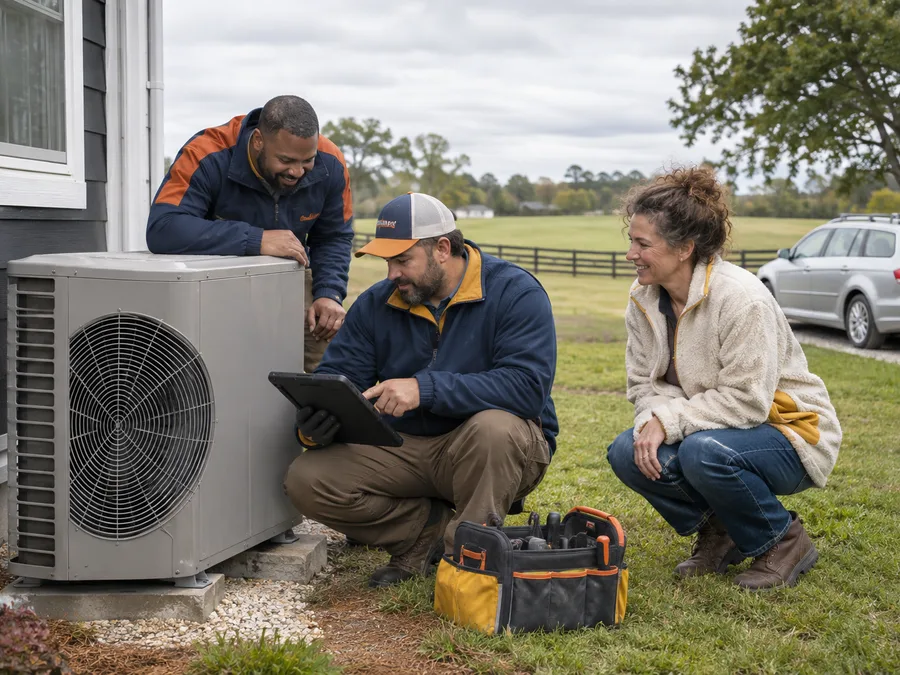
Questions
The part, the refrigerant and access drive the price. A capacitor swap on an outdoor unit sits at the low end of the typical $150 to $650 range, while a refrigerant leak in an attic air handler can reach $400 to $1,500.
Service covers homes throughout Virginia Beach, Virginia. Call (757) 523-3580 to check availability for a specific address.
Often not for major repairs, because R-22 has not been produced or imported in the U.S. since 2020 and the remaining supply is expensive. Small electrical repairs can still make sense.
Yes, if you smell burning, hear grinding, see ice on the coil or find water near electrical parts. Running a damaged system can turn a small repair into a compressor or motor replacement.
Yes. Dual-fuel systems share a thermostat and air handler, so the technician checks both sides when one stops working.
Equipment replacement often needs a permit, and the contractor can check what applies to a specific job. Most repairs, such as motors, capacitors and controls, do not.
Next step
Describe what the system is doing and get a clear answer on the cause, the fix and the typical cost from an experienced local HVAC technician. Planning a bigger project? A trusted HVAC company handles replacements and service plans too.