
Hot Upstairs, Cold Downstairs
Heat rises, and a single system without zoning or good return air upstairs struggles to keep both floors even.
Year-round comfort
Some rooms too hot, others too cold, and bills climbing every season? Get the equipment and ductwork working together again.

Both seasons
A house needs cooling for long, humid summers and dependable heat for the cold snaps in between, and most homes get both from one connected system. Comfort problems often come from that connection, from ductwork, airflow or controls, rather than from one failed machine. That is the starting point for heating and cooling. Virginia Beach, VA homes with uneven rooms or rising bills usually have more than one cause.
A comfort visit looks at the outdoor unit, the furnace or air handler, the thermostat and the ducts together. Cooling and heating problems often share a cause, like a leaking return duct in the attic or an undersized filter grille.
If the system has simply stopped working, the right call is an experienced HVAC repairman. If it works but never feels right, airflow and ductwork are the usual culprits, and that is everyday work for a heating and cooling company. Virginia Beach summers make the difference obvious, since a weak room shows up fast in July.
Comfort problems
Heat rises, and a single system without zoning or good return air upstairs struggles to keep both floors even.
Long duct runs, crushed flex duct or closed dampers starve the rooms farthest from the equipment.
An oversized or poorly set up system cools fast and shuts off before it removes enough moisture.
Leaky ducts and returns pull dust from attics and crawl spaces into the living space.
Dirty coils, refrigerant leaks and duct losses make the equipment run longer for the same comfort.
Whistling, banging or booming points to undersized returns or ducts that expand as they heat and cool.
Older homes
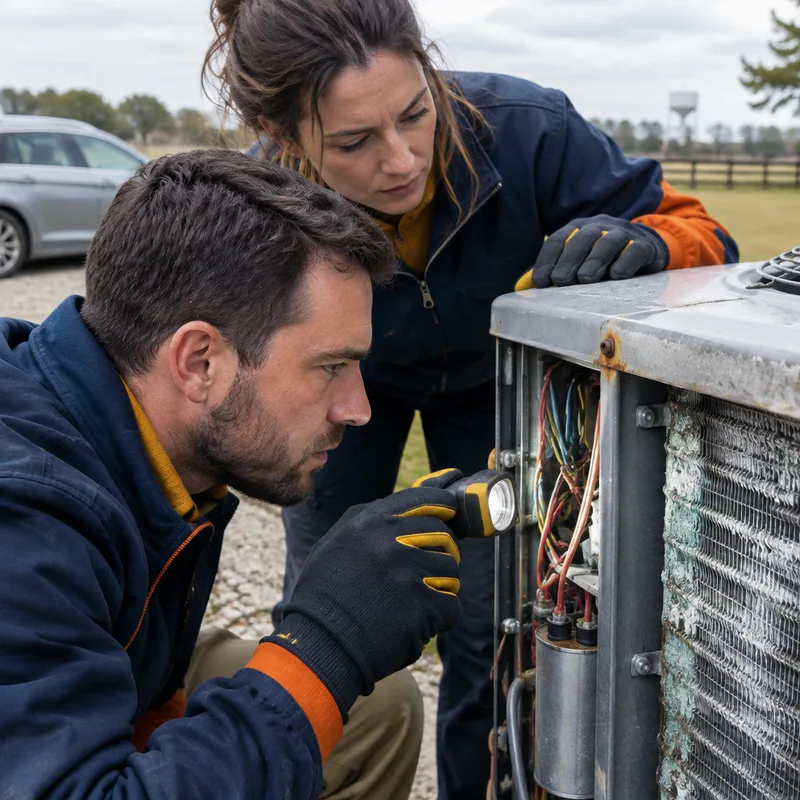
Census survey data shows 59.4% of homes in the city were built between 1970 and 1999, and another 20.8% before 1970. Many of those houses still have their original ductwork, even after two or three equipment replacements.
Older ducts were often sized for different equipment and sealed with tape that has long since let go. Leaks in a hot attic pull humid air into the system, and undersized returns make new, efficient equipment work harder than it should.
Heating and cooling contractors check the ducts along with the equipment for exactly that reason. A new heat pump on 40-year-old ductwork often performs no better than the unit it replaced.
The visit
01
Which rooms, which season, and when it started all help point toward the cause.
02
The outdoor unit, furnace or air handler and the thermostat are tested for normal operation.
03
Airflow, temperature and humidity are measured at the equipment and in the problem rooms.
04
Accessible ducts in the attic or crawl space are checked for leaks, crushing and disconnected runs.
05
Fixes are explained with typical costs, from sealing and balancing to equipment changes.
Typical costs
Most heating and cooling repairs typically cost about $150 to $650, and refrigerant leak repair typically runs $400 to $1,500. A seasonal tune-up typically costs $70 to $200 per visit.
When new equipment is the answer, a new air conditioner typically costs $3,300 to $5,900, a heat pump replacement $4,200 to $7,900 and a full system with furnace and ductwork $7,000 to $16,000. These are typical local ranges, not quotes.
The price for a specific house is set after the visit, once the cause is known.
Equipment choices
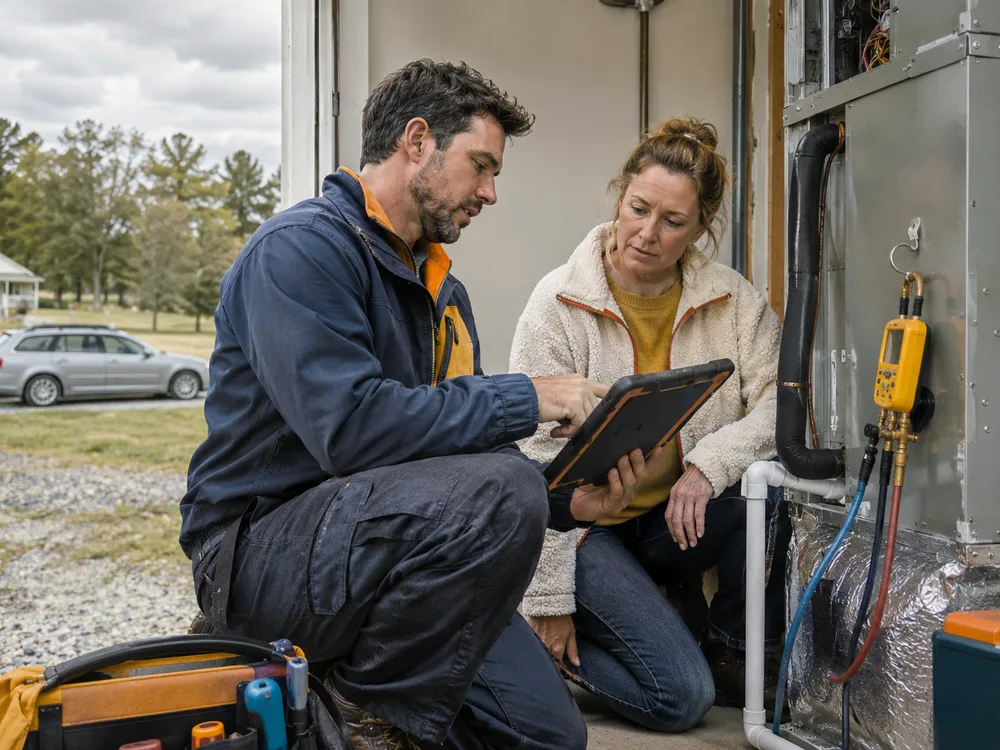
Homes heated mainly by electricity usually rely on heat pumps, while others pair a gas furnace with an air conditioner. A dual-fuel setup uses a heat pump most of the year and switches to gas on the coldest days.
A house with a gas line has more choices for heating and air conditioning. Virginia Beach homes without one usually rely on a heat pump with electric backup. The right match depends on the house, the ductwork and the fuel available. A heating and cooling tech can compare running costs for each option using the home’s actual equipment and bills.
Whatever the choice, sizing comes first. An oversized system short cycles and leaves the house damp; an undersized one runs constantly on the hottest and coldest days.
Room by room
Sealing leaks and reconnecting loose runs often fixes rooms that get too little air.
A return in a closed-off bedroom or upstairs hallway helps air circulate through the whole floor.
Adjusting dampers sends more air to the rooms that need it and less to the ones that do not.
Zoning or a ductless unit handles a bonus room or addition the main system was never sized for.
One room always miserable? Get the airflow measured and fixed.
Call (757) 523-3580Questions
Usually a duct problem: a long run, a crushed or disconnected duct, no return air, or a room over a garage. Measuring airflow at the register shows which.
Yes. Ducts are part of the system, and leaks or crushed runs are a common cause of uneven rooms and high bills.
It depends on the house, fuel prices and the existing ductwork. Many local homes use heat pumps, and dual-fuel systems combine both.
Often. Duct sealing, added returns, balancing and correct thermostat setup fix many comfort problems for far less than a new system.
Yes. Call (757) 523-3580 to check availability for your address.
Next step
Call to describe which rooms are uncomfortable and when, and get practical options from a trusted local technician, from simple duct fixes to new equipment.