
Stuck Reversing Valve
The system cools when it should heat, or the other way around. The valve, its solenoid coil or the thermostat wiring is usually to blame.
Heating and cooling
Heat pump blowing cool air in winter or running nonstop all summer? Get the real fault found and both seasons working again.
Year-round equipment
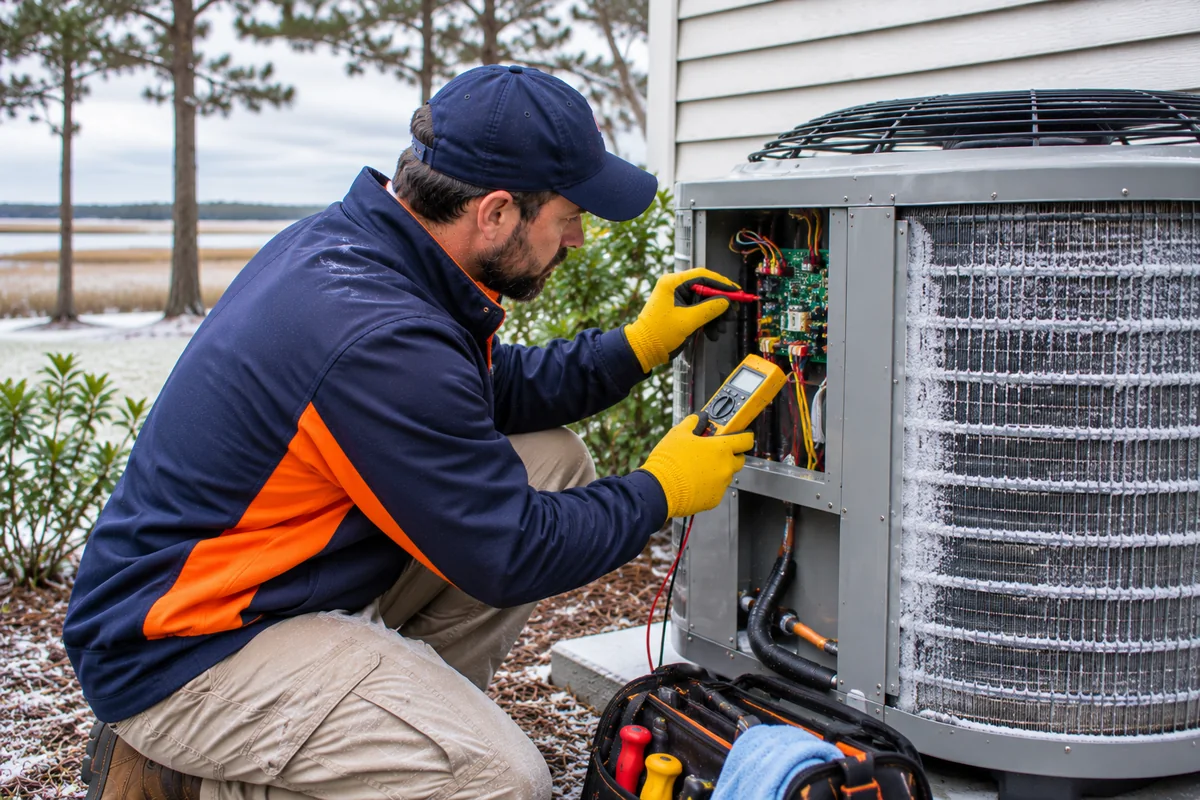
A heat pump does two jobs with one set of equipment, so when it fails, the house loses both heating and cooling. Heat pump repair starts by working out which part of the cycle has broken down: the compressor, the reversing valve, the defrost controls, the outdoor fan or the backup heat strips.
Common problems include a heat pump that blows lukewarm air in winter, ices over and never defrosts, runs constantly on emergency heat, or cools fine but will not switch to heat. Each has a different cause and a different price.
When the trouble goes beyond the heat pump itself, such as a furnace backup or ductwork, a broader HVAC repair service visit covers the whole system.
Winter operation
In heating mode, the outdoor coil gets colder than the outside air and collects frost. Every so often the heat pump reverses briefly to melt it, and a cloud of steam from the outdoor unit during defrost is normal.
Winters near the coast are mild but damp. The normal January average at Norfolk International Airport is 42.2°F, which sits right in the range where frost builds quickly on a heat pump coil. A failed defrost sensor or control board leaves the coil iced over and the house cold.
A heat pump that is solid white with ice, or one that never seems to defrost, should be switched to emergency heat until it is checked.
Backup heat strips pick up the load while the coil defrosts, so warm air should keep coming from the vents.
Common faults
The system cools when it should heat, or the other way around. The valve, its solenoid coil or the thermostat wiring is usually to blame.
Ice covers the coil and stays. Defrost sensors, timers and control boards are the usual suspects.
High power bills and an “Aux” or “Em Heat” light point to an outdoor unit that has stopped carrying its share.
Weak heating and cooling in both seasons often means a leak at a coil, a valve or a flare fitting.
A failed fan motor or capacitor causes high head pressure and trips the compressor on safety.
Heat pumps need a thermostat configured for them. A wrong setting can run the strips constantly or block heating entirely.
Preventive care
01
The filter is checked and the blower and return are inspected, since low airflow hurts heating and cooling alike.
02
The outdoor coil is rinsed and the indoor coil checked so heat transfers properly in both modes.
03
The condensate drain and pan are cleared to prevent summer shutdowns and water damage.
04
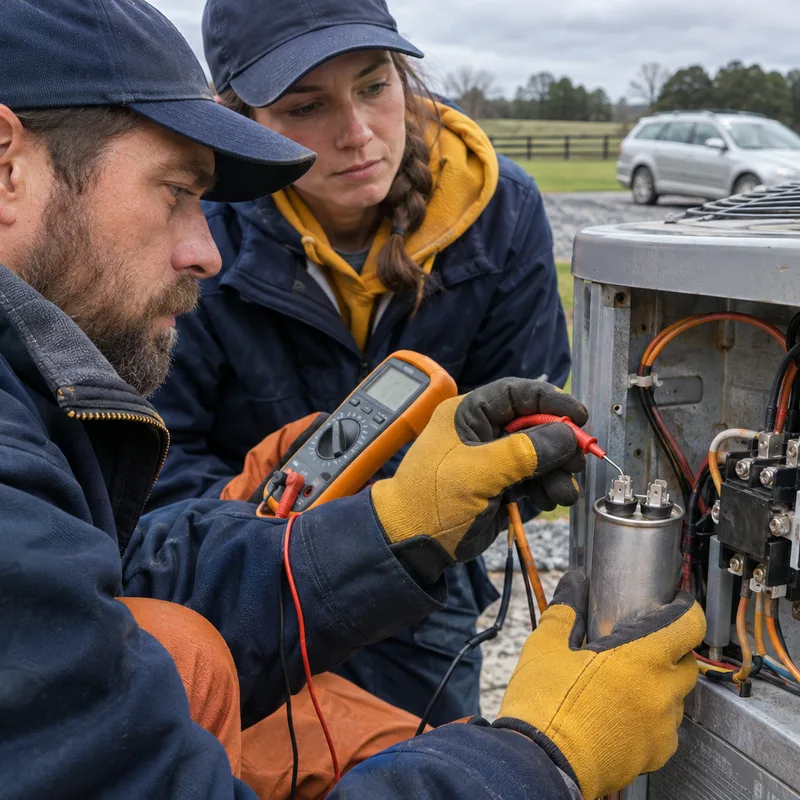
Capacitors, contactors and connections are tested, and loose wiring is tightened.
05
The defrost cycle and the heat strips are tested so the system is ready for cold mornings.
Backup heat

Electricity is the main heating fuel for 55.6% of homes in the Virginia Beach–Norfolk–Newport News metro area, compared with 38.2% that use utility gas, according to Census survey data compiled by the regional planning district commission. Many of those electric homes rely on a heat pump with electric heat strips as backup.
Strips cost much more to run than the heat pump itself. When a failed outdoor unit leaves the strips doing all the work, the power bill is often the first warning.
Checking that the strips come on only when needed, and that the outdoor unit carries the load the rest of the time, is part of every heating diagnosis.
Older systems
Replacement is worth considering when the compressor fails on a system over about 10 to 12 years old, the coil leaks repeatedly or the unit uses R-22. A heat pump replacement typically costs $4,200 to $7,900.
Heat pump installation also gives a chance to correct sizing and duct problems that made the old unit struggle.
Typical costs
Most heat pump repairs typically cost about $150 to $650, covering capacitors, contactors, fan motors, defrost controls and thermostat problems. Refrigerant leak repair typically runs $400 to $1,500.
A failed compressor or reversing valve costs more and is often weighed against replacement. These are typical local ranges, not quotes, and the final price follows the diagnosis.
That makes a single electrical part the most common fix in heat pump repair. Virginia Beach, VA homes with older outdoor units often need nothing more than that.
Ice that never melts off the coil? Get the defrost checked.
Call (757) 523-3580Questions
Most heat pump repairs typically cost about $150 to $650. Refrigerant leak repair typically runs $400 to $1,500, and compressor failures cost more.
It may be in a defrost cycle, which is normal for a few minutes. If it continues, the reversing valve, defrost controls or refrigerant charge may be at fault.
Yes. Steam during a defrost cycle is normal. Smoke, a burning smell or a coil that stays covered in ice is not.
The thermostat has switched to backup heat strips, either because it was set that way or because the outdoor unit is not keeping up. A heat pump that stays on emergency heat should be checked.
Yes. Heat pumps keep heating well below freezing, with backup strips helping on the coldest mornings and during defrost.
Yes. Call (757) 523-3580 to check availability for heat pump repair at your address.
Next step
Call to describe what the heat pump is doing and get a clear repair plan from a trusted local technician, whether the problem shows up in summer or winter.