
Dirty Flame Sensor
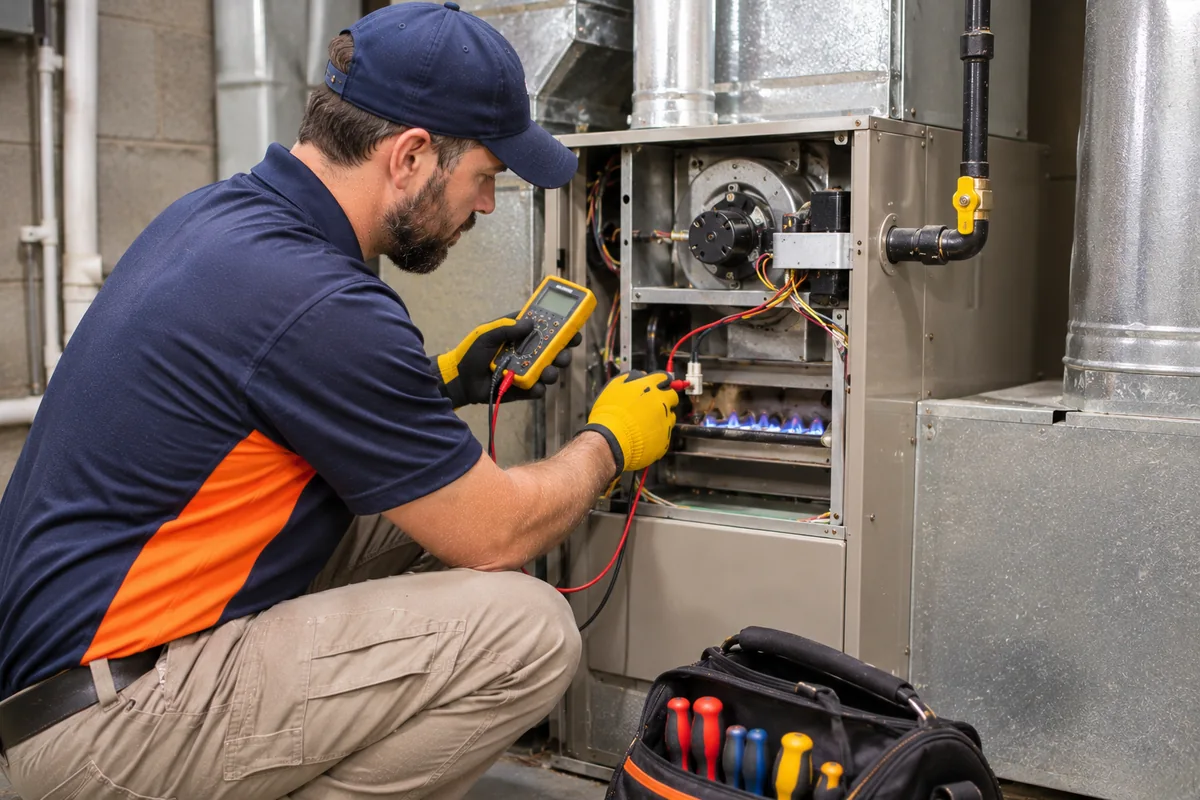
The burners light, then shut off after a few seconds. A coated flame sensor cannot prove the flame, so the control board closes the gas valve.
No heat
Cold house, a furnace that clicks but never lights, or heat that keeps cutting out? Get the fault traced and the heat back on safely.
Heating trouble
A furnace that will not light, lights and shuts off, or blows cold air has a specific failed part behind it, and the first job is finding which one. On gas units that is often a dirty flame sensor, a cracked igniter, a stuck pressure switch or a clogged filter tripping the high-limit switch.
Electric furnaces and air handlers with heat strips fail differently: a burned sequencer, a tripped breaker or an element that has opened up. Both types are tested the same careful way, with the power and gas checked first.
A heating problem in January sometimes turns out to involve the whole system. When the cooling side has also been acting up, broader HVAC repair may be the better way to look at it.
Common causes
The burners light, then shut off after a few seconds. A coated flame sensor cannot prove the flame, so the control board closes the gas valve.
Hot surface igniters crack with age. The inducer runs and the board tries to light, but nothing happens and the unit locks out.
A blocked filter overheats the heat exchanger and trips the high-limit switch, so the burners cycle on and off while the house stays cold.
A blocked vent, a cracked hose or water in the inducer housing keeps the pressure switch open and stops ignition.
Heat is made but never reaches the rooms. A failed capacitor or a worn motor leaves warm air sitting in the cabinet.
Dead batteries, a loose wire or a misconfigured thermostat can look like a furnace failure.
Diagnosis
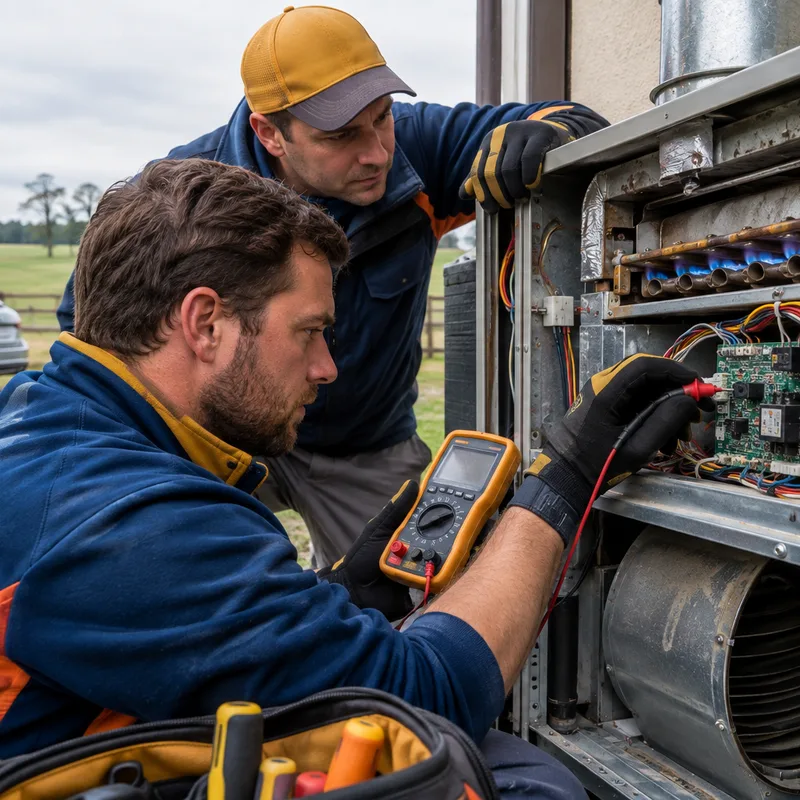
The technician checks the thermostat call, the gas supply, the ignition sequence and the safety switches in order, watching the control board’s fault code along the way. Most furnaces blink a code that narrows the search.
A furnace repair technician also checks the venting, the heat exchanger area and the flame color, because a heating problem can be a safety problem too. Carbon monoxide alarms on every floor are a good idea in any home with a gas furnace.
Every finding is explained before parts are ordered or replaced, with the price for the repair.
Gas safety
01
Leave the house right away and take everyone with you, including pets.
02
Do not flip light switches, use phones, start a car in an attached garage or light anything on the way out.
03
From a safe distance, call 911, then Virginia Natural Gas at 877.572.3342.
04
Do not go back inside until emergency responders or the gas company say it is safe.
05
Once the gas has been made safe, call (757) 523-3580 to have the furnace and gas connections checked.
Typical costs
Furnace repair typically costs about $100 to $480 for common fixes such as a flame sensor, igniter, pressure switch, limit switch or blower capacitor. A failed inducer motor, control board or gas valve sits at the upper end, and a cracked heat exchanger usually points toward replacement. These are typical local ranges, not quotes, and the price is set after the diagnosis. Those figures cover typical furnace repair. Virginia Beach homes with a furnace in a tight attic or crawl space can land toward the upper end because of access.
Older equipment
A furnace past about 15 to 20 years old with a cracked heat exchanger, repeated ignition failures or a blower that keeps failing is often a better candidate for replacement than another round of parts.
Rising gas bills, rooms that never warm up and rust inside the cabinet are other signs. A gas furnace replacement is also a good time to check whether the ductwork and the air conditioner match the new equipment.
Repair is still the right call for many older furnaces when the heat exchanger is sound and the failure is a single part.
Local winters
Winters in Virginia Beach, Virginia are mild by most standards. The normal January average at Norfolk International Airport is 42.2°F, so a furnace may sit idle for weeks and then run hard during a cold snap. That stop-and-start pattern is when dusty flame sensors and weak igniters tend to fail.
Turning the heat on for a test run in the fall, before the first cold night, catches most of those problems early. Virginia Beach furnace repair calls spike on the first cold weekend of the season for exactly that reason.
Many homes here pair a gas furnace with an air conditioner, while others use a heat pump with a gas furnace as backup. Heating and furnace repair on a dual-fuel system includes checking that the thermostat switches between the two correctly.
Burners lighting, then quitting? Get it checked before a cold night.
Call (757) 523-3580Questions
Common fixes like flame sensors, igniters and switches typically cost about $100 to $480. Control boards, inducer motors and gas valves cost more.
The most common cause is a dirty flame sensor, followed by a clogged filter tripping the limit switch. Both are routine fixes once confirmed.
Leave the house, avoid anything that could spark, and call 911 and Virginia Natural Gas at 877.572.3342 from outside. Do not go back in until it is declared safe.
Turning the power switch off and back on once is fine. If it locks out again, leave it off and have it checked rather than resetting it repeatedly.
Yes. A cracked heat exchanger or blocked vent can release carbon monoxide, which is why venting and flame checks are part of a heating diagnosis.
Often yes, if the heat exchanger is sound and the failure is one part. Repeated breakdowns or a cracked heat exchanger usually point toward replacement.
Next step
Call to describe what the furnace is doing and get a safe, clear plan to repair furnace problems from an experienced local technician before the next cold night.